What is Thyroid Cancer Surgery?
Thyroid cancer surgery is the main treatment for removing cancerous tissue in the thyroid gland, located at the base of the neck.
The procedure typically involves removing part or all of the thyroid to prevent cancer from spreading to lymph nodes, lungs, or other organs.
It is the gold-standard treatment for papillary, follicular, medullary, and selected anaplastic thyroid cancers.
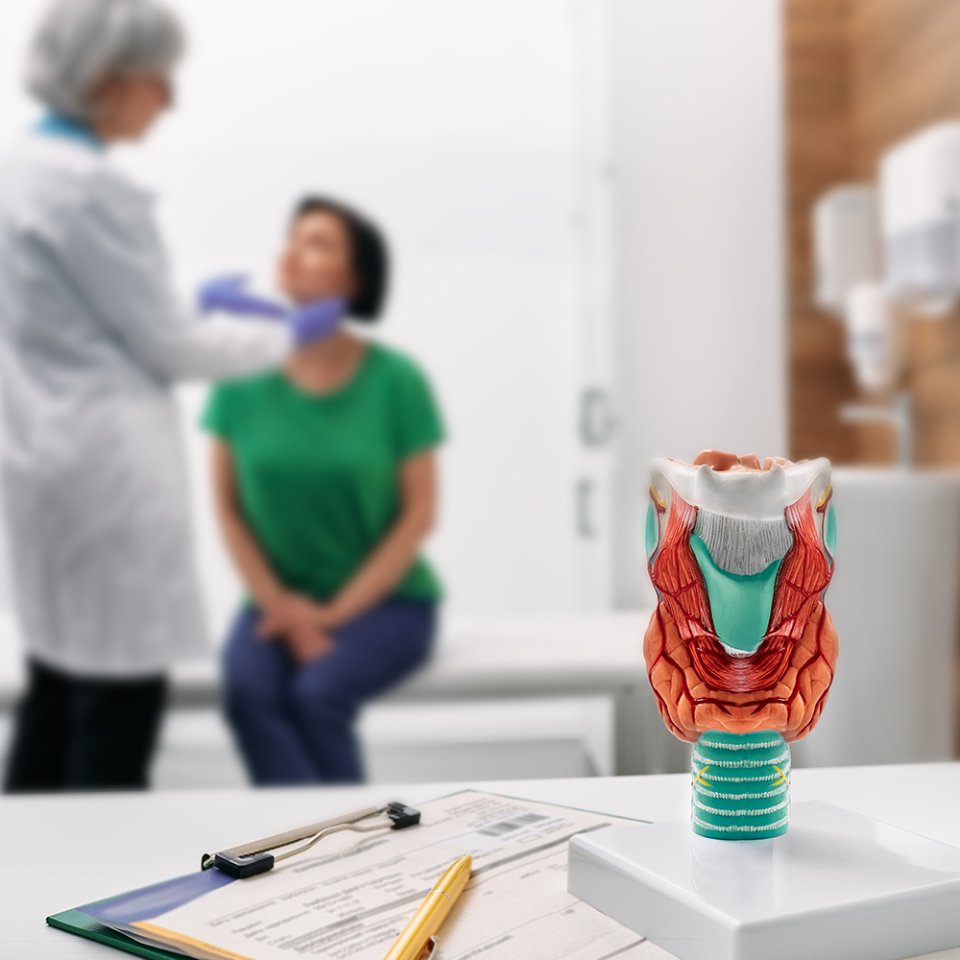
Why is Thyroid Cancer Surgery Needed?
Surgery is recommended for patients with:
-
Confirmed thyroid cancer (papillary, follicular, medullary, etc.)
-
Suspicious thyroid nodules with malignant biopsy results
-
Enlarged nodules causing swallowing or breathing problems
-
Thyroid masses spreading to lymph nodes
-
Aggressive or rapidly growing tumors
-
Goiters with cancer risk
Early surgery significantly improves survival and reduces recurrence.
Types of Thyroid Cancer Surgery
At Büyük Anadolu Hospital, our endocrine surgeons perform:
Total Thyroidectomy
Complete removal of the thyroid gland.
➤ Recommended for most thyroid cancers.
Hemithyroidectomy (Lobectomy)
Removal of one lobe of the thyroid.
➤ Ideal for small or early-stage tumors.
Central or Lateral Neck Dissection
Removal of affected lymph nodes when cancer spreads.
Minimally Invasive Thyroid Surgery
Smaller incision, faster healing, and improved cosmetic outcome.
Secure Application Form – Contact Our Medical Team
How is Thyroid Cancer Surgery Performed?
- Performed under general anesthesia
- Duration: 1–2 hours
- A small incision is made at the lower neck
- Thyroid gland and involved lymph nodes are removed
- Special care is taken to protect vocal cord nerves and parathyroid glands
- Hospital stay: 1–2 nights
- Thyroid hormone replacement begins after total thyroidectomy
Recovery After Thyroid Cancer Surgery
- Initial recovery: 5–7 days
- Full recovery: 2–3 weeks
- Temporary throat discomfort or hoarseness may occur
- Normal activities can resume within one week
- Thyroid function tests ensure correct hormone dosing
- Radioactive iodine therapy may be recommended depending on cancer type
Possible Risks & Our Preventive Measures
| Possible Risks | Our Preventive Measures |
|---|---|
| Temporary hoarseness | Careful nerve monitoring during surgery |
| Low calcium levels | Parathyroid preservation & calcium supplementation |
| Bleeding or hematoma | Advanced vessel control & post-op observation |
| Infection (rare) | Sterile technique & antibiotics |
| Scar formation | Minimally invasive incision & special wound care |
Why Choose Büyük Anadolu Hospital for Thyroid Cancer Surgery?
- Highly experienced endocrine & oncology surgeons
- Advanced nerve monitoring technology for vocal cord protection
- Expertise in minimally invasive thyroid surgery
- On-site ultrasound, CT, MRI, PET-CT, and full endocrinology support
- Multidisciplinary cancer management (Surgery + Oncology + Nuclear Medicine)
- Customized postoperative hormone therapy
- Affordable prices for international patients
- Complete coordination from diagnosis to follow-up
Thyroid Cancer Surgery FAQ
After total thyroidectomy, yes. After lobectomy, not always.
Temporary hoarseness is possible; permanent change is very rare.
Most patients resume daily activities within 1 week.
Only selected cases; it depends on tumor type and size.